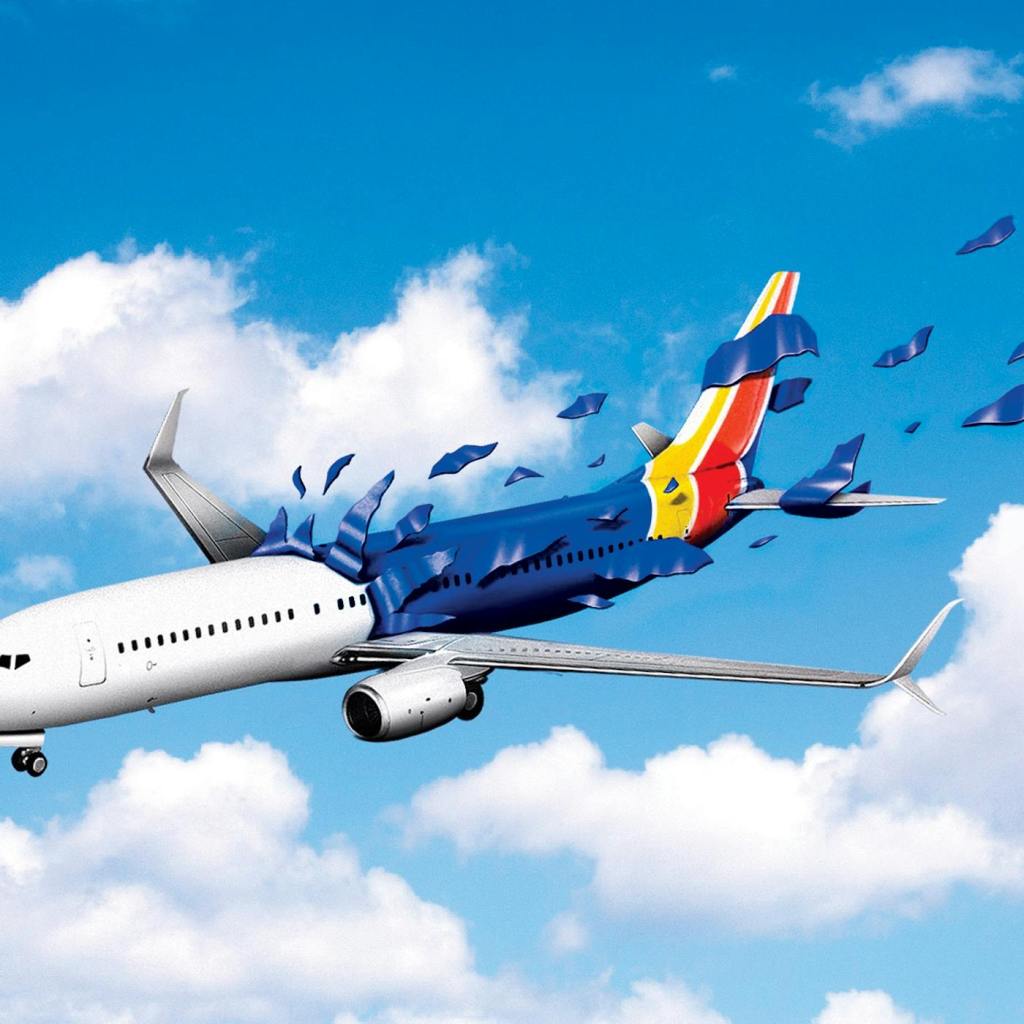
Southwest recently announced the retirement of “bags fly free”. But in my view the news isn’t just about baggage fees. While legacy carriers pursued byzantine fare structures and nickel-and-diming, Southwest won customers with its refreshing simplicity: low fares, simple fare structure, open seating, no change fees, and “bags fly free.”
Sadly, one by one, these have all disappeared. The recent news is just one more move in a long line of gradual concessions that is masking a key point: Southwest lost its core cost-advantage long ago and it needs to stop trying to be the airline it once was. Rather than this drip-drip erosion of its brand, it needs to fully pivot.
A Business Model Built for Another Time
Southwest’s success story is legendary. In a sector known for complexity and customer dissatisfaction, Southwest simplified and delighted. By flying a single aircraft type, focusing on underserved airports, and minimizing turnaround times, it built a structurally lower-cost model that let it offer cheaper fares and greater operational efficiency.
The brilliance of the model was that customers were in on the trade-off. No seat assignments? No problem — boarding was brisk and boarding groups kept things orderly. No frills onboard? That’s fine — tickets were affordable, and everyone got where they were going. And importantly, the benefits Southwest did offer, like two free checked bags, felt like a generous contrast to the industry norm.
In return, the brand earned a loyal following and outsized goodwill, particularly among leisure travelers, families, and value-seeking road warriors.
But that advantage is no longer structural.
When Everyone Learns to Cut Costs
Southwest’s edge has dulled over time. As it grew, and legacy airlines learned, its early playbook of operational discipline and network efficiency was no longer exclusive. With leaner fleets, dynamic pricing algorithms, and a la carte fare models, even the big three (Delta, United, and American) have learned how to operate more like budget carriers when they want to. (And using consolidation and airport-gate monopolies to avoid having to do so at all.)
Meanwhile, ultra-low-cost carriers (ULCCs) like Spirit and Frontier have moved even further down the cost curve, offering rock-bottom base fares with aggressive upselling of everything else. These airlines have cultivated their own customer bases by being unabashedly transactional — no illusions, just a menu of services and fees.
Southwest, once in the sweet spot between these two extremes, is now being squeezed from both sides.
Its fares are no longer meaningfully cheaper than those of competitors. Its once-unique perks have become cost centers under pressure. And its middle-of-the-road customer experience — now stripped of many of its old distinctions — offers fewer compelling reasons to choose Southwest over anyone else.
Death by a Thousand Cuts
In recent years, Southwest has quietly chipped away at the very things that made it special. Change fees were first replaced with change restrictions. Companion Pass requirements crept upward. Rapid Rewards devaluations hit frequent flyers. New fare classes (Wanna Get Away Plus?) added complexity to what was once a refreshingly simple ticketing system. And now, the end of “bags fly free.”
Each of these changes makes sense in isolation. But collectively, they chip away at the brand’s core promise. We sense a company drifting from its values but refusing to say so out loud. Instead of pivoting with conviction, Southwest is diluting its identity while hoping no one notices.
Time to Pivot
There’s an old business axiom: evolve or die. But just as dangerous is half-evolving — making incremental changes without committing to a new identity. That’s where Southwest finds itself today. It’s time to admit the shift. Own it. And pivot to something new with clarity.
I honestly don’t know what that would be. But I do know that they need to find a new reason for customers to choose to fly with them. Southwest doesn’t need to copy other airlines — but it does need to stop clinging to a model that no longer offers competitive advantage.
Because if the only message customers hear is: “We’re still Southwest, just a little worse every year,” they’ll eventually stop listening.
 Consumer Musings
Leave a comment